


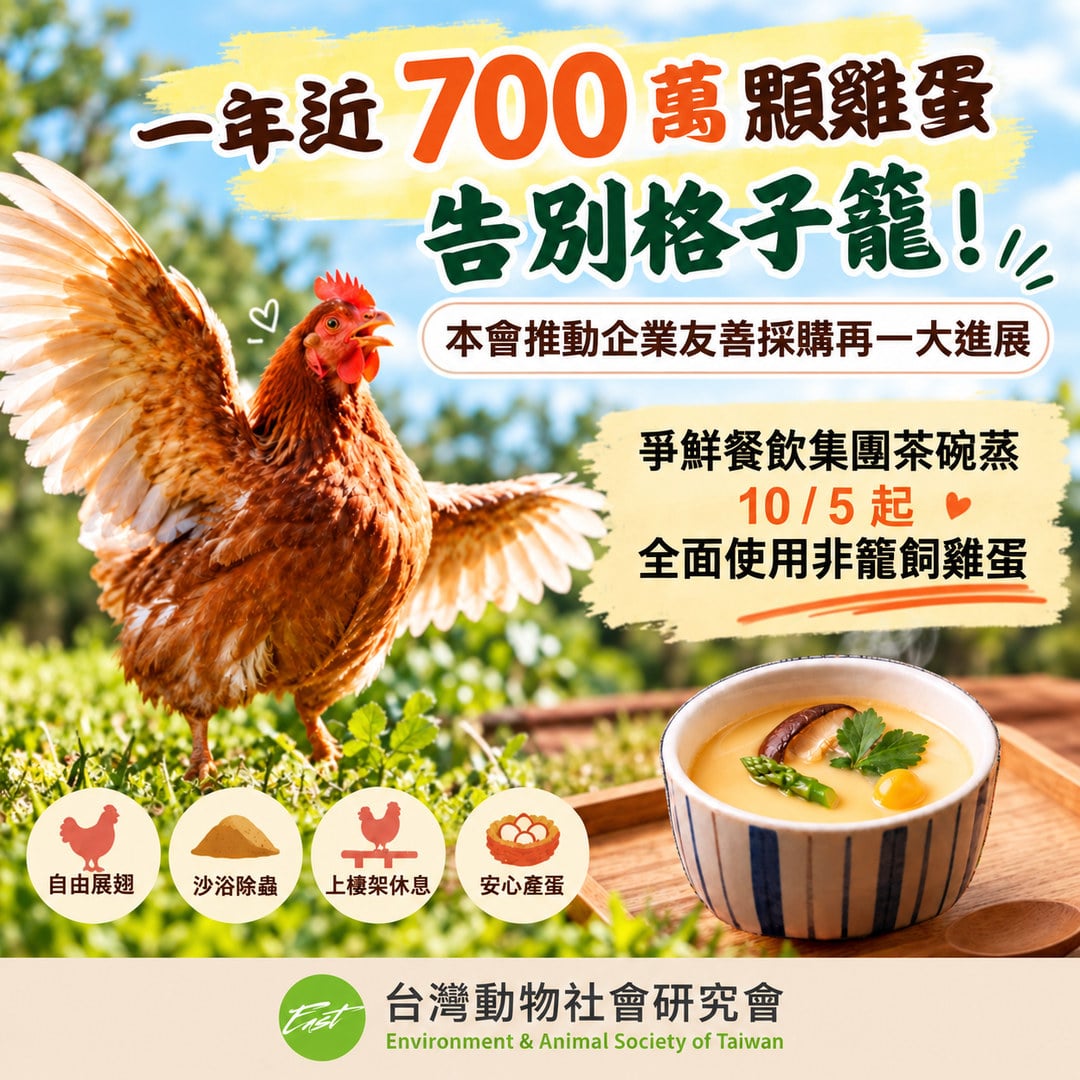
從一顆蛋開始,改變萬千母雞的一生,讓人與動物更健康。
台灣動物社會研究會長期推動經濟動物福利,倡議遊說餐飲、零售、飯店及食品企業落實「非籠飼雞蛋」採購政策。10月5日起,又一家大型連鎖餐飲集團加入改變行列——爭鮮餐飲集團旗下品牌茶碗蒸,將全面轉換使用符合動物福利規範,並取得「動物福利標章」驗證的非籠飼雞蛋。
研究會副執行長陳玉敏表示:非常感謝爭鮮餐飲集團落實友善採購政策,以實際行動支持動物福利與永續發展。爭鮮每月約莫使用58萬顆雞蛋製作門市販售的茶碗蒸,相當於每年近700萬顆雞蛋的採購量。這項友善採購政策,讓每年近3萬隻產蛋母雞,不會再被終生囚禁在殘酷的格子籠裡,而能在尊動動物自然天性與需求的環境中生活,擁有展翅、沙浴、棲息及安心產蛋的動物福利。
雞蛋是台灣民眾最熟悉的日常食材之一,但人們卻很少有機會看見辛苦產蛋母雞的處境。傳統格子籠飼養,是將3-4隻母雞終生限制囚禁在狹小籠中,母雞連最基本的自然行為展現,包括自由走動、伸展翅膀、上棲架休息、沙浴、社交、在巢箱安心產蛋的機會都沒有。終生痛苦抑鬱的母雞身心不可能健康,因此無法避免各種抗生素與疾病用藥使用,也連帶影響人們的食品安全與健康!
「非籠飼」(Cage free)飼養方式,是指母雞被飼養在符合動物福利規範的環境中,尊重母雞自然行為與需求,讓母雞在充足的活動空間裡可以盡情展翅、洗澡除蟲、上棲架休息、在巢箱裡安心產蛋,是目前全球餐飲集團致力落實採購的安心食材。爭鮮透過選用非籠飼雞蛋支持動物福利,不僅提升食材規格,更是讓母雞可以離開牢籠,讓消費者在享用茶碗蒸的同時,也能為動物及永續發展盡心。
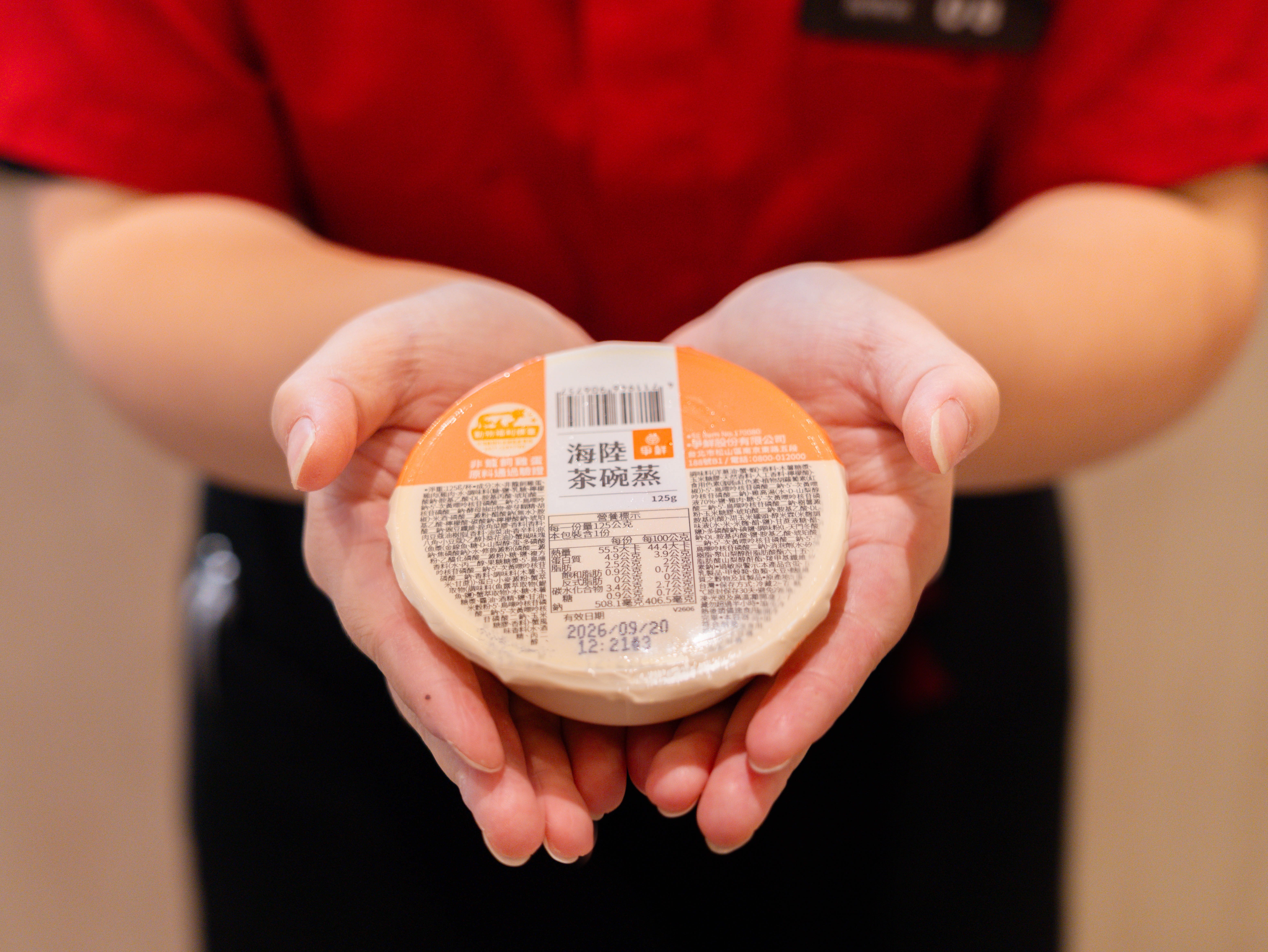
爭鮮這次轉換涵蓋旗下全品牌,包括爭鮮迴轉壽司、爭鮮PLUS及爭鮮gogo的海陸茶碗蒸、定食8的玉米茶碗蒸,都改用非籠飼雞蛋製作;MAGiC TOUCH点爭鮮也同步使用非籠飼雞湯風味蛋液。除了門市現場販售的品項,未來其他通路販售的茶碗蒸,也將陸續轉換為非籠飼蛋。爭鮮的茶碗蒸一直是消費者喜愛的餐點,透過這次全面升級,爭鮮集團讓友善採購不只是企業口號,而是真實的實踐行動。
陳玉敏鼓勵更多企業加入善待經濟動物與消費者健康的友善採購行列,當企業落實友善採購政策,就能向生產端釋放明確市場訊息,帶動更多農民轉型投入尊重動物福利的飼養,讓人與動物、環境能朝向共好的正向發展!
媒體聯絡人:台灣動物社會研究會副執行長陳玉敏
0910-150-908
【EAST Press Release】 October 5, 2026
Nearly 7 Million Eggs a Year transition to Cage Free, One More Progress in EAST’s Corporate Responsible Sourcing Campaign
Sushi Express Group Switches All Chawanmushi(茶碗蒸) Products to Cage-Free Eggs Starting October 5
Change begins with a single egg—transforming the lives of thousands of hens and contributing to better health for both people and animals.
The Environment & Animal Society of Taiwan (EAST) has long worked to improve the welfare of farmed animals, engaging with restaurants, retailers, hotels, and food companies to encourage the adoption of cage-free egg sourcing policies. Beginning October 5, another major restaurant chain is joining this movement: Sushi Express Group will transition all of its chawanmushi products to cage-free eggs that meet animal welfare standards and are certified under Animal Welfare Labelling Scheme.
Yu-Min Chen, Deputy CEO of EAST, said:
“We sincerely thank Sushi Express Group for implementing a responsible sourcing policy and taking concrete action to support animal welfare and sustainable development. Sushi Express uses approximately 580,000 eggs every month to make the chawanmushi sold at its restaurants—equivalent to nearly 7 million eggs a year.
“This responsible sourcing policy means that nearly 30,000 laying hens each year will no longer have to spend their entire lives confined in battery cages. Instead, they can live in environments that respect their natural behaviors and needs, with opportunities to spread their wings, dust-bath, perches, and lay their eggs in a secure nesting area.”
Eggs are one of the most familiar everyday foods in Taiwan, yet consumers rarely have the opportunity to see the condition hens endured.
In conventional battery cage systems, three to four hens are confined together in a small cage for virtually their entire lives. They are unable to perform even their most basic natural behaviors, such as walking freely, stretching their wings, resting on perches, dust-bathing, socializing, or laying their eggs in a private and secure nest.
Hens subjected to lifelong confinement and poor welfare cannot maintain optimal physical and psychological well-being. Such conditions can also contribute to greater reliance on antibiotics and other medications used to manage disease, raising broader concerns about food safety and human health.
Cage-free systems, by contrast, hens are housed in the environment that is designed to meet animal welfare standards and better accommodate their natural behaviors and needs. Hens have sufficient space to move and spread their wings, dust-bathe and groom themselves, rest on perches, and lay their eggs in nest boxes. Cage-free eggs have increasingly become part of the responsible sourcing policies adopted by major restaurant and food companies around the world.
By choosing cage-free eggs, Sushi Express is not only upgrading its ingredient sourcing standards but also supporting better animal welfare. The transition allows hens to live outside cages while giving consumers an opportunity to contribute to animal welfare and sustainability simply through the food they choose.
The transition covers all brands under Sushi Express Group. Chawanmushi products at Sushi Express, Sushi Express PLUS, and Sushi Express gogo, as well as the corn chawanmushi at TEISHOKU 8, will all be made with cage-free eggs. MAGiC TOUCH will also use cage-free chicken-flavored liquid egg products.
Beyond products sold at its restaurants, Sushi Express Group plans to progressively transition chawanmushi sold through other retail channels to cage-free eggs as well.
Chawanmushi has long been a popular choice among Sushi Express customers. Through this comprehensive upgrade, Sushi Express Group is demonstrating that responsible sourcing is not merely a slogan—it can be translated into concrete action with a tangible impact on animals.
Chen encouraged more companies to join the movement toward responsible sourcing that benefits both farmed animals and consumers:
“When companies put responsible sourcing policies into practice, they send a clear message to producers. This can encourage more farmers to transition toward farming systems that respect animal welfare and help create a positive future in which people, animals, and the environment can share the common good. ”
Media Contact:
Yu-Min Chen
Deputy CEO
Environment & Animal Society of Taiwan (EAST)
Tel: +886-910-150-908
Email: [email protected]
推薦文章 recommended article


